You are here


location
basis e.V. Gutleutstraße 8-12 60329 Frankfurt am Main
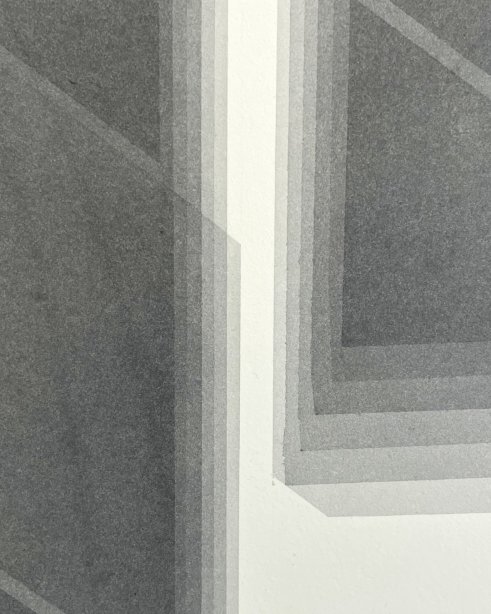
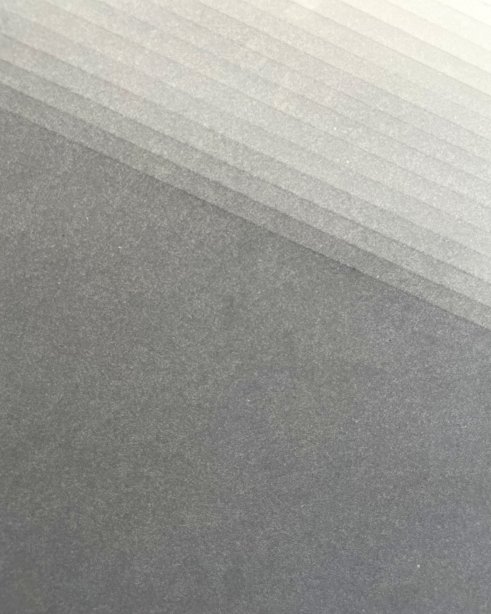
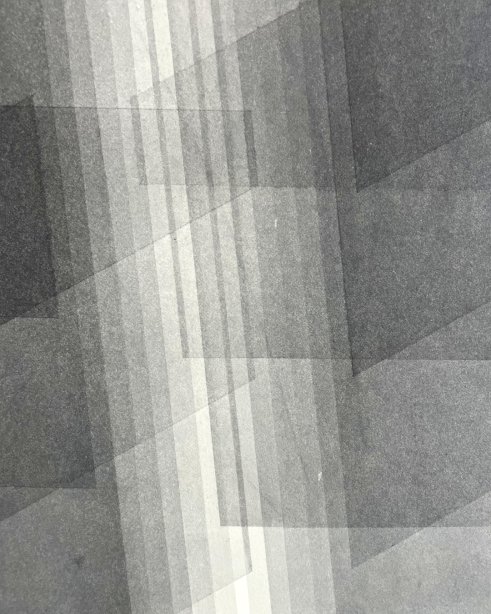
Sample and Hold by Marcell Marosfalvi
Opening: June 25, 2026, at 6:00 pm
We warmly invite you to the opening of Sample and Hold, an exhibition by our guest artist Marcell Marosfalvi, on June 25, 2026, at 6:00 pm. The works were created during his residency at basis e. V. as part of the AIR_Frankfurt program in collaboration with Budapest Gallery.
Marcell Marosfalvi is a Budapest-based artist working across painting, photographic processes, video, and digital media. His practice investigates the unstable relationship between material and digital realities, exploring how data, virtual space, and technological systems shape perception, memory, and embodiment. Drawing on both experimental image-making techniques and art historical references, Marosfalvi’s works balance precision and error, structure and chance, often translating immaterial digital phenomena back into tactile, physical forms. Through layered watercolors, light-sensitive media, and immersive moving-image installations, he creates reflections on contemporary experiences of alienation, artificiality, and digital displacement.
About the exhibtion:
Sample and Hold takes its title from an electronic function: an analogue signal-processing technique that captures a momentary state of an ever-changing signal in response to a trigger, then freezes it until the next trigger arrives. A continuous flow is interrupted, suspended, and translated into a sequence of steps. The original signal begins to resemble a staircase. But where do these stairs lead?
The exhibition considers sampling not only as a technical operation, but as a way of perceiving and organizing the world characteristic of modern systems of knowledge. Reality is divided into intervals, fragmented by Boolean logic — a system that processes information through binary values such as true/false, yes/no, 1/0, or on and off, which make digital systems possible in the first place — captured in momentary states, and held in place until an update is triggered. This rhythm of capture, pause, and refresh underpins the quantified life at large: a world increasingly made legible through measurements, thresholds, states, and discrete units.
Yet here, the digital is approached through the material and pictorial logic of painting. Collected 3D scans form the basis of the works in the exhibition, where they are subjected to the same logic of sampling, reduction, and repetition through which the world itself is increasingly perceived. Made uniform, arbitrarily enframed, and sampled at fixed intervals along the virtual depth axis — a dimension that painting can produce only as an illusion — the scans translate spatial data into the flatness of the picture plane. Their structures become visible as echoes of particular states. Monumental and ground-plan-like, the images suggest maps, circuits, infrastructural units, or ruins: places where the weightlessness of the digital encounters the spatial language of the built world.
Throughout the exhibition, concrete reality seems to seep through the holes of interstates, evaporating from the seemingly airtight systems of control. What remains are momentary positions, frozen transitions: images that linger at the edge between flow and stillness.